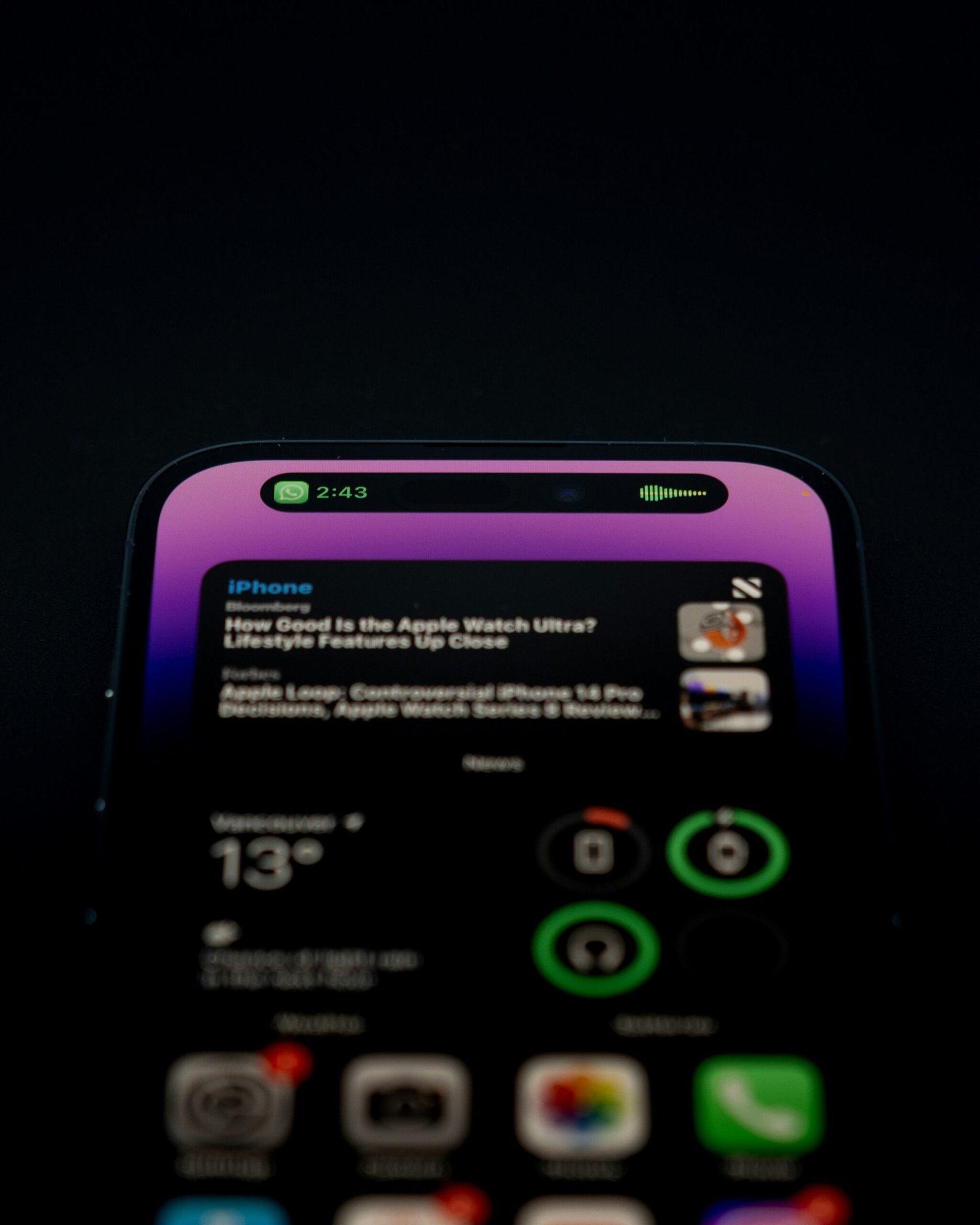
You are likely reading this on a device that is actively trying to stop you from reading this.
Every few minutes, it buzzes. It dings. It flashes a light. It slides a banner down from the top of the screen.
- ” Breaking News: Someone said something on Twitter.”
- ” 15% Off Sale ends in 4 hours!”
- ” Your Aunt liked a photo of your cat from 2014.”
According to recent data, the average smartphone user receives between 65 and 80 notifications per day. For power users, that number jumps to over 150. That is one interruption every 6.4 minutes of your waking life.
We like to think we are good at ignoring them. We say, “Oh, I just glance at it and go back to work.”
But neuroscience disagrees.
Every time that phone buzzes, your brain pays a “Switching Cost.” Even if you don’t pick it up, your attention has been hijacked. You have been pulled out of the deep stream of thought and forced to evaluate a threat.
We are drowning in attention debt. And when you are drowning in debt, sometimes the only financial solution is to declare bankruptcy and start over.
It is time to declare Notification Bankruptcy.
The Science: Why You Are a Lab Rat
To understand why you can’t just “use willpower” to ignore your phone, you have to understand B.F. Skinner.
Skinner was a psychologist in the 1930s who discovered Operant Conditioning. He put rats in a box with a lever.
- Scenario A: If the rat pressed the lever and got food every time, it pressed it only when hungry.
- Scenario B: If the rat pressed the lever and got food randomly (sometimes a huge feast, sometimes nothing), the rat became obsessed. It pressed the lever non-stop, ignoring sleep and other needs.
This is called a Variable Reward Schedule.
Your phone is a Skinner Box.
- Sometimes the notification is a boring email (no reward).
- Sometimes it’s a text from a friend (small reward).
- Sometimes it’s a viral post or a match on a dating app (huge reward).
Because you never know which one it’s going to be, your brain releases dopamine in anticipation of the buzz. You are biologically wired to check. This makes “moderation” nearly impossible. You are fighting millions of years of evolution with a frontal cortex that is tired from a long day of work.
(Insert your Manual Image here: Small size, Align Right)
The Solution: The “Nuclear Option”
Most people try to “manage” their notifications. They turn off Instagram but leave WhatsApp on. They mute email but leave Slack on.
This is like trying to quit smoking by only smoking on weekends. It rarely works.
The concept of Notification Bankruptcy is simple: You cannot pay the attention debt you owe. So, you wipe the slate clean.
You must default to Zero.
Step 1: The Great Purge
Go into your phone settings right now. Turn off ALL notifications. Yes, all of them.
- No text messages.
- No emails.
- No news alerts.
- No social media.
- No “activity” updates from your fitness watch.
Your phone should be a silent brick unless someone is physically calling you.
Step 2: The “VIP List” Reinstatement
Live with the silence for 24 hours. You will feel “Phantom Vibration Syndrome”—where you think your phone buzzed when it didn’t. This is withdrawal.
After 24 hours, you are allowed to add back only the notifications that are “Time Sensitive and Critical.”
Ask this question: “If I don’t see this for 4 hours, will something catch on fire?”
- Uber/Lyft Arriving: Yes (Keep it).
- Fraud Alert from Bank: Yes (Keep it).
- Text from Spouse/Kids: Yes (Keep it).
- Email: NO. (Email is almost never an emergency).
- Slack/Teams: NO. (Unless you are an on-call surgeon).
- Instagram/Twitter/TikTok: ABSOLUTELY NO.
Push vs. Pull: Flipping the Dynamic
The goal of Notification Bankruptcy is to move your life from Push to Pull.
- Push World: The app decides when you look at it. It “pushes” an alert into your face, interrupting your Flow State and ruining your focus.
- Pull World: You decide when you look at the app. You “pull” the information when you are ready.
You can still check Instagram. You can still check your email. But you do it on your schedule, not theirs. You check it at 12:00 PM because you are taking a lunch break, not at 10:14 AM because a red dot appeared.
How to execute “The Pull” (Using Tools)
Living without notifications requires a new system. You need to verify that you aren’t checking your phone out of boredom.
1. The “Check-In” Interval Instead of checking your phone randomly, set a specific interval. Use our Online Countdown Timer on your laptop. Set it for 60 minutes. Promise yourself: “I will not touch my phone until this timer hits zero.”
When the timer beeps, you have 5 minutes to check everything—texts, emails, likes. Then, reset the timer. This batches your distractions into a controlled window, rather than letting them bleed into your entire day.
2. Measure Your Addiction Do you know how long you can actually go without looking? Open our Online Stopwatch. Hit start. Put your phone face down. See how long you last before you instinctively reach for it. Is it 14 minutes? 45 minutes? Gamify this. Try to beat your high score tomorrow.
3. The “Parkinson’s” Effect on Distraction As we discussed in our guide on Parkinson’s Law, work expands to fill the time available. If you allow notifications to interrupt you, your 15-minute task expands to 4 hours because you are constantly restarting your mental engine. By killing notifications, you are compressing the time back down. You are closing the container.
Conclusion: You Are Not a User; You Are the Product
The tech companies refer to us as “Users.” But in the drug trade, “users” are the people on the street. The guys in the suits are the dealers.
Companies like the Center for Humane Technology have been warning us for years: If you are not paying for the product, you are the product. Your attention is being sold to advertisers, and notifications are the hook they use to drag you back to the store.
Declaring Notification Bankruptcy isn’t just a productivity hack. It is an act of rebellion.
It is saying, “My attention belongs to me.”
It will be uncomfortable at first. You will feel like you are missing out. But after a week, you will realize something profound: The world didn’t end because you answered a text message 40 minutes late. But your peace of mind returned because you weren’t on call for the entire internet.
Wipe the slate clean. Turn them off.